
Health and Safety Policy for House Clearance Kensington
Policy statement: House Clearance Kensington is committed to protecting the health, safety and welfare of employees, contractors and members of the public while carrying out house clearance and rubbish removal services. This policy sets out the approach to risk control, safe waste handling and compliance with applicable health and safety requirements. The objective is to ensure safe systems of work for all rubbish collection and waste clearance activities carried out by the company.
 Scope: This policy applies to all operations undertaken by the house clearance and rubbish collection teams, including domestic clearances, estate clearouts, furniture removal, recycling segregation and removal of bulky waste. It covers work at customer premises, in vehicles and at temporary holding areas. All staff and authorised contractors must follow the procedures and safety measures described below.
Responsibilities and organisation
The following roles have defined responsibilities to deliver this rubbish clearance safety policy:
- Management — set safety standards, allocate resources, ensure risk assessments and training are in place.
- Supervisors — enforce safe working procedures, monitor teams on site and ensure PPE is used.
- Operatives — follow safe systems of work, report hazards, and use equipment correctly.
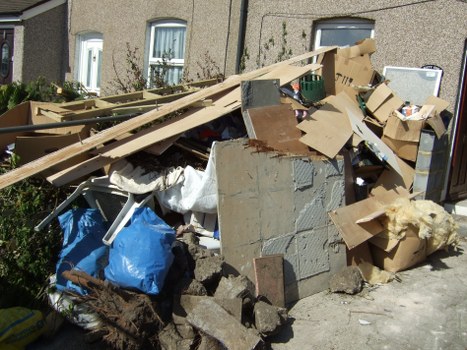 Line management will maintain records of competency, training and risk assessments. Staff are reminded that safety is a shared responsibility: any employee who spots unsafe conditions or practices must raise them immediately.
Risk assessment and hazard control
Before any house clearance or waste removal job begins a formal risk assessment must be completed. Key hazards to identify include manual handling injuries, slips/trips, sharp objects, asbestos-containing materials, hazardous household chemicals, sharps and biological contamination. Control measures must be proportionate to the assessed risk and may include elimination, substitution, engineering controls, administrative controls and personal protective equipment.
Controls and safe working procedures: All staff must be trained in safe lifting techniques, use of trolleys and lifting aids, and correct procedures for segregating recyclable items from general waste. Specific procedures cover the identification and segregation of hazardous items (e.g., batteries, solvents, paints), secure containment of sharps, and safe disposal of electrical equipment. PPE required for clearance work typically includes gloves, safety boots, high-visibility clothing, eye protection and respiratory protection where dust or moulds are present.
Vehicles used for rubbish transportation must be loaded securely to prevent shifting during transit; loads must not obstruct the driver’s view or exceed vehicle limits. Vehicle checks and maintenance schedules are mandatory to reduce mechanical failure risks.
Traffic and site safety: When working at external locations, clearly define the work area and put in place traffic management to protect operatives and pedestrians. Use cones, signs and spotters where appropriate. Consider timing of collections to reduce interaction with public footfall. Operatives should always maintain three points of contact when accessing vehicles and use reversing aids or banksmen when manoeuvring heavy vehicles.
Manual handling and ergonomics: Repeated lifting, awkward postures and carrying heavy items are leading causes of injury. Tasks should be planned to minimise manual handling, using mechanical aids and team lifts when necessary. Records of manual handling assessments should be maintained and reviewed regularly to reflect changes in work activities.
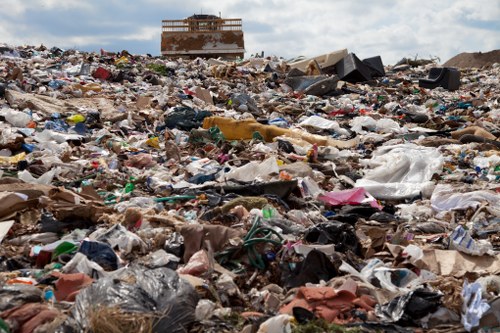 Emergency and hazardous material procedures: If asbestos, illegal waste or unknown hazardous substances are discovered, stop work immediately and follow the emergency response plan. Only trained and authorised personnel should deal with hazardous removals. First aid provision must be available at all times and staff trained in basic first response. Fire risks must be assessed for each site and appropriate extinguishers provided where necessary.
 Training, competence and welfare
All operatives must undergo induction training covering health and safety policy, risk assessment awareness, manual handling, correct use of PPE and safe use of equipment. Refresher training will be provided periodically and after any significant change to procedures or introduction of new equipment. Welfare facilities should be provided where reasonably practicable including access to toilets, drinking water and rest areas.
Incident reporting and investigation: Every incident, near miss or significant hazard must be reported using the company reporting procedure. Investigations will identify root causes and corrective actions to prevent recurrence. Records of incidents and corrective actions must be retained in line with statutory requirements and used as part of continual improvement.
Monitoring and review: Health and safety performance will be monitored through site inspections, toolbox talks, vehicle checks and periodic audits. Key performance indicators include incident frequency, training compliance and completion of risk assessments. This policy will be reviewed at least annually or whenever there are significant operational changes or updates to legal requirements.
Legal and regulatory compliance: The company will comply with relevant waste management, transport and health and safety legislation. Where specialist licences or consents are required for hazardous waste or vehicle movements, those must be obtained and maintained.
Policy endorsement: This Health and Safety Policy represents the commitment of the management to maintain safe working conditions for all involved in house clearance, waste removal and rubbish clearance services. All personnel are expected to cooperate fully in implementing these measures and to act in a manner that protects themselves and others.